CSS 2026
The 16th International Symposium on Cyberspace Safety and Security
Macau, China
| August 3-5, 2026

Keynote Speakers

Title: Post-Quantum Cryptography Migration: Securing Data and Protecting Privacy
Abstract:
The rapid advancement of quantum computing poses a fundamental threat to today's public-key cryptography, making the transition to post-quantum cryptography (PQC) an urgent global priority. This talk begins with an overview of the quantum threat landscape, recent developments in PQC standardization, and the practical challenges of migrating existing systems to quantum-safe cryptography. The talk then explores how PQC serves not only as a replacement for classical public-key cryptography but also as a foundation for a new generation of secure data protection and privacy-preserving applications. Two recent research projects will be presented. KyberBridge extends the NIST-standardized ML-KEM (Kyber) to support efficient one-to-many encrypted data sharing through broadcast proxy re-encryption. Keyword PIR enables users to retrieve records using keyword queries without revealing their interests to the server, while achieving efficiency comparable to state-of-the-art quantum-safe index PIR. Together, these examples demonstrate how PQC can enable practical quantum-safe applications that extend well beyond secure communications.
Short Bio:
Robert Deng is Lee Kong Chian Chair Professor, Deputy Dean for Faculty & Research, School of Computing and Information Systems, Singapore Management University (SMU). His research interests are in the areas of data security and privacy, network and distributed system security, and applied cryptography. He received the Outstanding University Researcher Award from National University of Singapore, Lee Kuan Yew Fellowship for Research Excellence and Zhongni Distinguished Educator Award from SMU, Asia-Pacific Information Security Leadership Achievements and Community Service Star from International Information Systems Security Certification Consortium (ISC2), the Public Administration Medal (Silver) Singapore National Day Award. He is a Fellow of IEEE, AAIA, and Academy of Engineering Singapore.
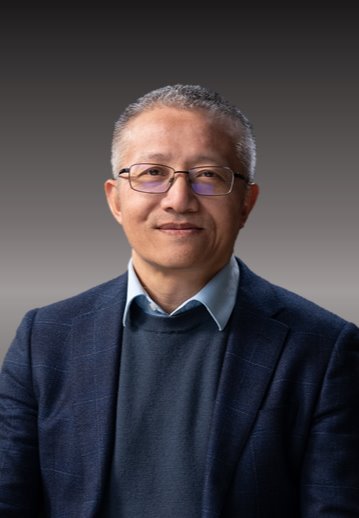
XiaoSong Zhang
Professor/Dean
University of Electronic Science and Technology of China
Title: Active Cybersecurity Models and Applications
Abstract:
Network confrontation in non-cooperative computer systems represents the core challenge of modern cybersecurity. Traditional defense strategies, which depend on passive response mechanisms, struggle to address sophisticated and unknown network threats. To tackle this limitation, the active cybersecurity concept is proposed to upgrade defense capabilities through integrated technical and strategic defense systems. This concept treats attackers and defenders as rational decision-makers optimizing their respective benefits, and adopts game theory to analyze their interactive behaviors and optimize confrontation strategies. On this basis, the SAPC active cybersecurity model is established to achieve integrated defense covering threat perception, analysis, tracing and response, with four core modules: intelligent perception, in-depth analysis, live visualization, and countermeasure. By modeling network confrontation as a dynamic game process, SAPC constructs a rigorous theoretical and practical cybersecurity framework. It realizes a paradigm shift from passive emergency response to active proactive confrontation, and promotes the innovative development of cybersecurity technologies with predictive, preventive and strategic defense capabilities.
Short Bio:
He is a professor and doctoral supervisor specializing in cybersecurity and network confrontation. He received his bachelor’s degree from Shanghai Jiao Tong University and his master’s and doctoral degrees from the University of Electronic Science and Technology of China. As a pioneering scholar in China’s automated network confrontation research, he has focused on intelligent cybersecurity theories and technologies since 2004, mainly covering threat perception, detection defense, and traceability. He originally proposed the active cybersecurity SAPC model and established a scientific research paradigm for automated network confrontation, whose relevant achievements were selected as outstanding outcomes of the 13th Five-Year Plan National Natural Science Foundation Project. He has long presided over national key R&D programs and key National Natural Science Foundation projects, leading the development of a series of core cybersecurity platforms that have advanced the systematic and automated development of China’s network security technologies. Academically, he has published 5 monographs, 2 translated works and 249 SCI/EI-indexed papers, and holds 63 authorized national invention patents. His original technological achievement, the domestic dedicated programming language and system for cybersecurity, was selected as one of the 2023 Top Ten Information and Communication Technological Advances and won the 2024 First Prize of China Institute of Communications Science and Technology Progress Award.

Aniello Castiglione
Associate Professor
Department of Management and Innovation Systems, University of Salerno, Italy
Title: Quantum Computing: Fact, Issues and Applications
Abstract:
As the era of Noisy Intermediate-Scale Quantum (NISQ) technology advances, the risk of quantum-based attacks capable of breaking conventional encryption becomes increasingly realistic. This is particularly concerning for Blockchain and Trustworthy Systems, which depend heavily on cryptographic mechanisms to ensure full security. The emergence of quantum computing introduces serious challenges, as existing blockchain infrastructures rely on cryptographic algorithms that are susceptible to quantum breakthroughs. One of the most vulnerable algorithms is the widely adopted Elliptic Curve Digital Signature Algorithm (ECDSA), which experts warn could be compromised as early as 2027, according to the most optimistic forecasts. Furthermore, the shift to post-quantum cryptography raises critical questions about the associated costs, including energy consumption and the additional storage required to implement these new cryptographic methods. The tremendous computational power of quantum devices holds the potential to significantly contribute to building a more reliable and secure world. However, this power also brings the risk of exploitation, putting numerous systems in jeopardy. To safeguard the digital environment and ensure the privacy and security of people worldwide, implementing strict regulations and advanced quantum security techniques—such as Post-Quantum Cryptography (PQC), Quantum Key Distribution (QKD), and Quantum Random Number Generators (QRNG)—will be crucial.
Short Bio:
Aniello Castiglione received his PhD in Computer Science from the University of Salerno, Italy, where he currently serves as Associate Professor in the Department of Management & Innovation Systems. In 2021, he obtained the Italian National Scientific Qualification for the position of Full Professor in Computer Science. His scientific activity is marked by a strong international profile, with more than 300 publications in international journals and conference proceedings. His international collaboration network includes more than 95 co-authors affiliated with over 84 institutions across more than 25 countries. He has also contributed to the organization of approximately 300 international conferences, mainly as Program Chair and Technical Program Committee member. On the editorial side, he is currently Managing Editor and Editor-in-Chief for Special Issues of Elsevier’s Image and Vision Computing. Until 2024, he served as Editor-in-Chief for Special Issues of the Journal of Ambient Intelligence and Humanized Computing, published by Springer. He has also been Managing Editor of two ISI-indexed international journals, reviewer for around 140 international scientific journals, Guest Editor of about 30 Special Issues, and member of more than 10 Editorial Boards of international journals, including IEEE Transactions on Sustainable Computing, IEEE Access, IET Image Processing, Journal of Ambient Intelligence and Humanized Computing, Multimedia Tools and Applications, Cyber Security and Applications, IET Intelligent Transport Systems, Sustainability, Smart Cities, Future Internet, and Electronics. Among his distinctions, one of his papers published in IEEE Transactions on Dependable and Secure Computing was selected as a “Featured Article” within the IEEE Cybersecurity Initiative in 2014. Another contribution, published in IEEE Cloud Computing, received the same recognition in 2018 within the IEEE Cloud Computing Initiative. According to Web of Science Essential Science Indicators, two of his papers, published respectively in IEEE Transactions on Computers and Future Generation Computer Systems, were recognized as “Highly Cited Paper” and “Research Front paper”, placing them among the top 1% of worldwide publications in Computer Science in 2017 and 2022. Since 2019, he has consistently been included in Stanford University’s ranking of the world’s top 100,000 most influential scientists, based on Scopus data, in the areas of Artificial Intelligence & Image Processing and Networking & Telecommunications. Since 2022, he has also appeared in the Italian Computer Science Top Scientists ranking published by Research.com. His main research interests include Artificial Intelligence in Cyber Security, Information Forensics, Digital Forensics, Cloud Security and Privacy, Communication Networks, Post-Quantum Cryptography, Quantum Computing, Applied Cryptography, Steganography, and Sustainable Computing. He is a member of IEEE and ACM.
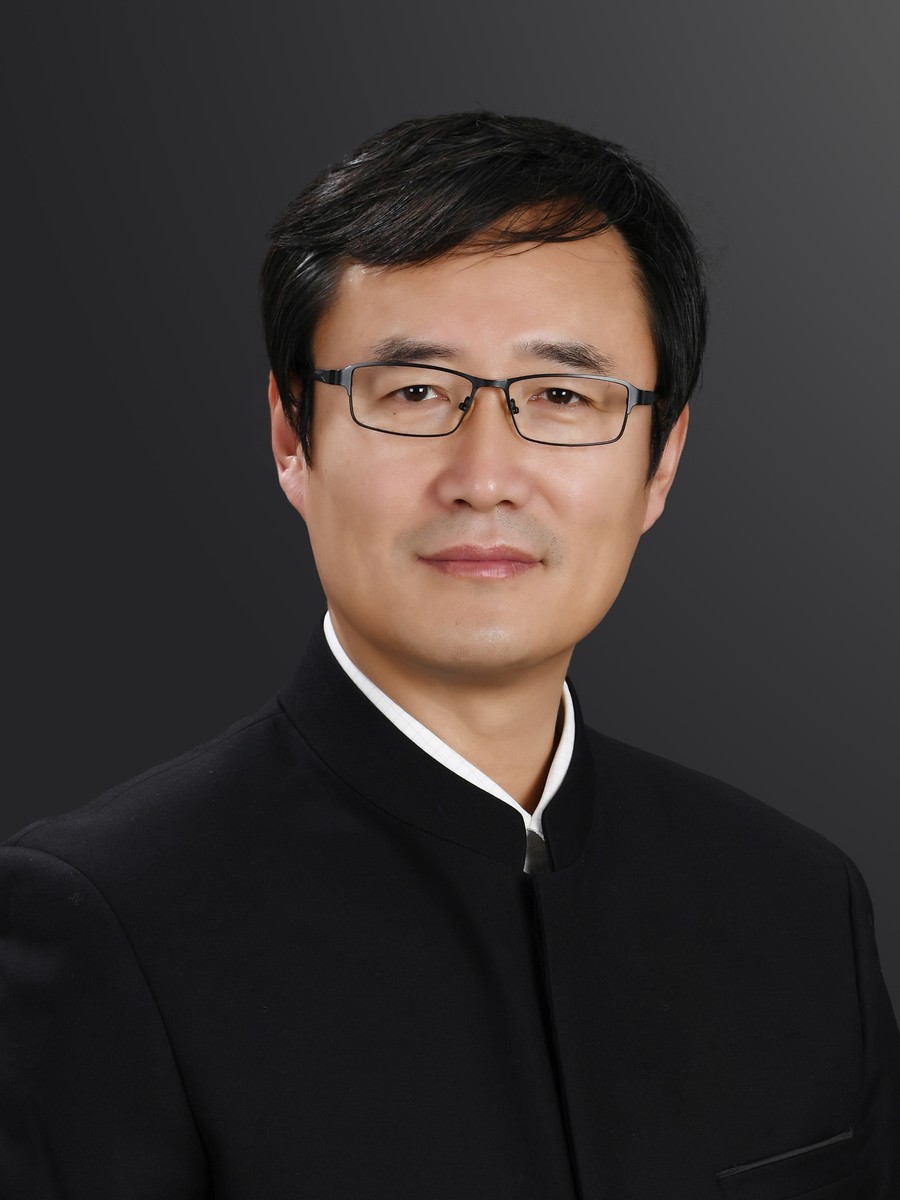
Jianwei Liu
Professor; Founding Dean, School of Cyber Science and Technology, Beihang University
School of Cyber Science and Technology, Beihang University, China
Title: AI-Empowered Security for 6G Networks
Abstract:
The sixth generation of mobile communications (6G), envisioned as an intelligently connected world spanning land, sea, air and space, will deliver terabit-per-second data rates, sub-millisecond latency and ultra-high reliability for a vast range of applications. However, the heterogeneous interconnection and ubiquitous connectivity of 6G raise severe security challenges: unified management is hard to guarantee, massive numbers of devices are hard to control, and network trust is hard to establish. Artificial intelligence (AI), with its capabilities in learning, knowledge reasoning, and perception-driven decision making, breaks through the limits of human expertise. With an AI engine at its core, deep collaboration across security layers, and closed-loop feedback for adaptive learning, an AI-empowered 6G security architecture can make endogenous security in 6G networks a reality.
This talk focuses on the emerging requirements and unique challenges of 6G network security and proposes a deeply integrated, AI-empowered security architecture. It elaborates on the core enabling role of AI in protecting the physical layer, the network layer and the service layer of 6G, and identifies the specific points at which AI can empower each layer. It further reviews frontier research topics and key technologies in AI-empowered 6G security, and outlines promising directions for future work, aiming to provide both theoretical reference and practical guidance for advancing endogenous security in 6G.
Short Bio:
Jianwei Liu is a Professor and Ph.D. supervisor at Beihang University, and the founding Dean of its School of Cyber Science and Technology. He is a National Distinguished Teaching Professor and a recipient of the Special Government Allowance of the State Council of China.
He currently serves as a member of the Discipline Appraisal Group of the Academic Degrees Committee of the State Council, Vice Chair of the Ministry of Education Steering Committee for Cyberspace Security Education, and a member of the National Steering Committee for Professional Degree Graduate Education in Cryptography. He is a Standing Council Member of the Chinese Association for Cryptologic Research, and a Standing Council Member and Chair of the Publication Committee of the Cyber Security Association of China. He is Executive Associate Editor-in-Chief of the Journal of Cyberspace Security Science and Associate Editor-in-Chief of the Chinese Journal of Network and Information Security. He has served as chief editor of 16 textbooks, and has authored 7 monographs and translated 1 book. His honors include the National Distinguished Teaching Professor award, the National Cyber Security Outstanding Teacher Award, the Baosteel Outstanding Teacher Special Prize, the Beijing Distinguished Teaching Professor Award, and the Beijing Outstanding Teacher Award.

Title: Encrypted Data Deduplication: Rebuilding Trust Models for Cloud Storage Optimization
Abstract:
Cloud storage faces problems such as large data scale, high redundancy and strong privacy requirements. Driven by encrypted data deduplication, optimizing encrypted data storage is an important approach to rebuild the trust model of cloud storage. Currently, there are bottlenecks in encrypted data deduplication technology regarding guess attacks, deduplication efficiency and cross-data type deduplication, which cannot meet the requirements of efficient and secure storage of large-scale data.
This presentation is based on the balance between storage efficiency and privacy protection in a non-trusted execution environment. It focuses on the technical limitations of encrypted data deduplication and storage optimization requirements to realize the optimization of storage space efficiency and privacy. It focuses on introducing technologies such as batch secure deduplication, fuzzy deduplication, color-aware deduplication and hierarchical deduplication. We also discuss the future research feasibility of encrypted data deduplication in visual data deduplication, entropy based similarity check and AI integrated deduplication technology.
Short Bio:
Candidate for Academic and Technical Leaders of Sichuan Province, and recipient of Xihua University's "My Favorite Teacher" title. She has worked as a research assistant and visiting scholar at Curtin University (Australia), University of Waterloo (Canada) and University of Wollongong (Australia). Currently, she serves as a Standing Committee Member of the Professional Committee on Big Data Security and Privacy Computing of the Chinese Information Processing Society of China. Focusing on the research of cryptography and information security, she has presided over 8 national and provincial-level scientific research projects on privacy protection in vehicular ad-hoc networks and data security in industrial internet. As the first (corresponding) author, she has published more than 40 papers in journals and conferences including IEEE TDSC/TSC, IEEE ICC, JIII, The Computer Journal and TCS. She has presided over the construction of provincial first-class undergraduate courses, provincial advanced courses and provincial high-quality postgraduate teaching resources, and won the second prize of teaching achievement, the third prize of the Outstanding Talent and Educator Challenge of China Chengdu International Software Design and Application Competition as the first achiever. She also guided the postgraduate work "Pioneer of Secure Exchange and Sharing of Encrypted Data in Cloud Computing" to win the provincial silver award in the "Internet+" competition.

Chiara Pero
Assistant Professor (tenured as Associate Professor)
Department of Human Sciences, Link Campus University, Rome, 00165, Italy
Title: PQ-FLCom: Post-quantum secure communication for industrial federated learning
Abstract:
Federated Learning (FL) has become a key paradigm for enabling collaborative artificial intelligence in Industry 4.0 by allowing distributed devices to train shared models without exchanging sensitive data. Despite its privacy advantages, the continuous exchange of model updates exposes FL to communication-level threats such as eavesdropping, model poisoning, and man-in-the-middle attacks. Furthermore, the emergence of quantum computing poses a significant challenge to the classical cryptographic mechanisms currently protecting these communications. PQ-FLCom is a modular communication framework that integrates NIST-standardized post-quantum cryptographic primitives into industrial federated learning systems. Its multi-level security architecture provides configurable protection for confidentiality, integrity, and authenticity while preserving the efficiency required by Industrial Internet of Things (IIoT) applications. Experimental results demonstrate the framework's robustness against communication-level attacks and evaluate the computational overhead introduced by post-quantum cryptography, showing that strong quantum-resistant security can be achieved without compromising the practicality and scalability of distributed learning systems.
Short Bio:
Chiara Pero received the B.Sc. and M.Sc. degrees in Computer Science from the University of Salerno, Italy, in 2016 and 2018, respectively. She earned the Ph.D. degree in Computer Science from the same university in 2023, graduating with the highest distinction (“Excellent”) with a dissertation entitled “Behavioral Biometrics in the Era of Artificial Intelligence”. She is currently with Link Campus University, Rome, Italy. She holds the Italian National Scientific Qualification (ASN) for Associate Professor in Computer Science (Competition Sector 01/B1). She has authored more than 50 peer-reviewed journal and conference publications, which have received over 600 citations. She serves as Associate Editor for several international journals and as Guest Editor for numerous Special Issues and scientific workshops. She is a member of the Biometrics and Image Processing Laboratory (BIPLab), the Context Aware Security Analytics Laboratory (CASALab), and the Computer Graphics Laboratory (CGLab). She is also an IEEE Member and a member of the Italian Association for Research in Computer Vision, Pattern Recognition, and Machine Learning (CVPL). Her research interests include computer vision, pattern recognition, deep learning, biometrics, and trustworthy artificial intelligence, with recent research focusing on the integration of post-quantum cryptography into intelligent systems.